

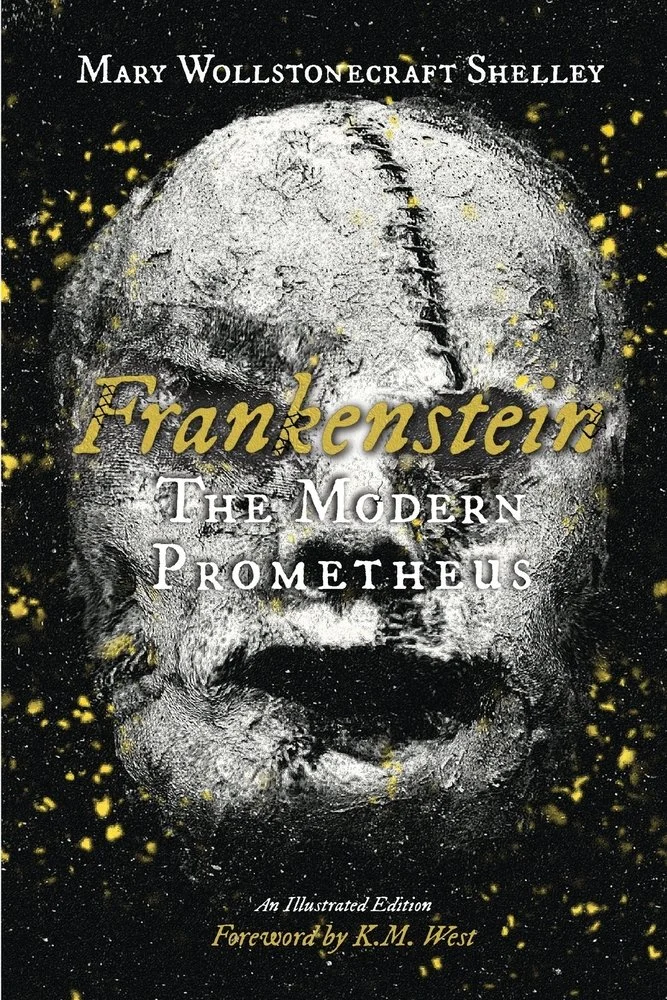
Frankenstein;
or, The Modern Prometheus
by Mary Wollstonecraft Shelley
Foreword by K.M. West
In a chilling tale that blends science, ambition, and the boundaries of human morality, Frankenstein tells the story of Victor Frankenstein, a brilliant young scientist who dares to defy nature by creating life from death. But his triumph quickly turns to horror when his creation - an intelligent, sensitive being - awakens to a world that rejects him.
As the creature grapples with isolation and rage, Victor is haunted by the consequences of his obsession. Their intertwined fates spiral into a tragic confrontation that explores the darkest corners of human desire, responsibility, and the cost of playing god.
Written during 'the year without summer' in 1816, Mary Wollstonecraft Shelley's Frankenstein; or, The Modern Prometheus stands as a foundational text in both Gothic literature and early science fiction. It captures the proverbial 'lightning strike' of perfect conditions for a person to channel creativity into a work so complex and revolutionary that it inspires humanity for centuries. First published anonymously in 1818, the novel was revised and republished in 1831 under Shelley's married name, with notable changes that reflect the maturation of her philosophical outlook through loss, grief, and other personal experiences. The 1831 edition, often considered the definitive version and the one used for this production of the text, offers a deeper meditation on fate, responsibility, and the perilous pursuit of knowledge that resonates as much today as ever.